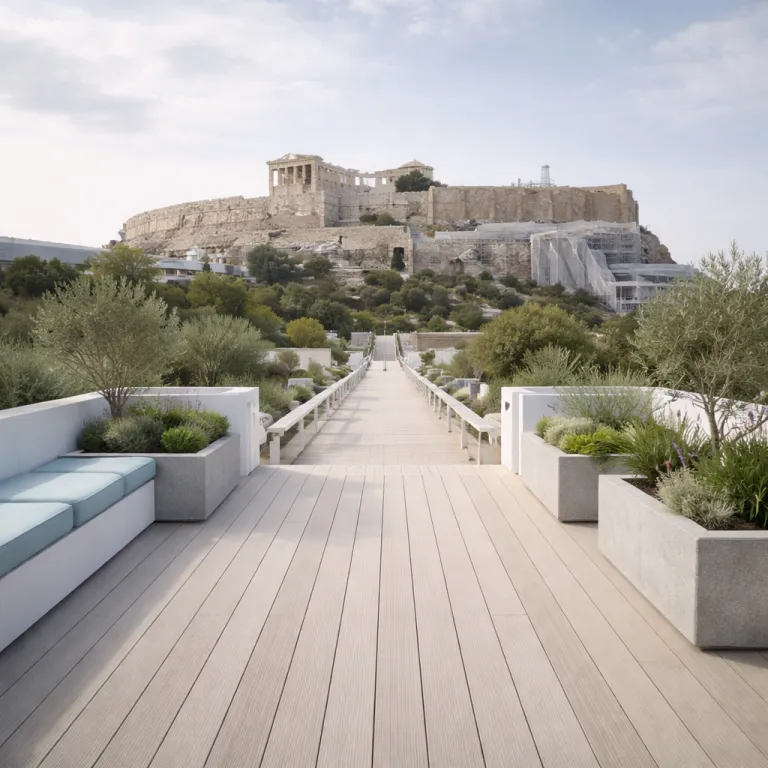
Athens Overtourism: Luxury Travel’s Impact on the High‑End Guest Experience
Athens is no longer just a convenient stopover between flights to the islands; it has become a primary destination where luxury travelers compete with mass tourism for space, silence and service. The strain of visitor growth is now visible from the moment your car crawls up Syngrou Avenue toward the city center, as coaches of foreign tourists unload in waves near Syntagma and the first Acropolis tour groups queue before breakfast. For discerning guests who expect time‑rich stays and attentive service, the question is no longer whether to visit Athens in Greece, but how to experience the city without being swallowed by its own success.
Official data from the Bank of Greece and the Hellenic Statistical Authority (for example, the Bank of Greece Travel Services balance sheets for 2019–2023 and ELSTAT’s annual Arrivals at Tourist Accommodation Establishments releases) show how sharply tourism in Athens has expanded and why it matters for luxury travelers who value calm and access. International arrivals to the wider Attica region rebounded strongly after the pandemic, with city‑break visitors pushing annual numbers toward the seven‑million mark in the early 2020s, while the permanent population of the municipality remains around 650,000–700,000 residents according to recent ELSTAT population estimates. At peak time the ratio of tourists to locals in central neighborhoods can feel closer to a cruise ship than a European capital, and this pressure is not abstract; it shapes everything from how long you wait for a table in a Greek taverna in Plaka to whether your hotel concierge can secure last‑minute access to a gallery opening or a discreet table in Kolonaki.
For high‑end guests, the most visible pressure point is the Acropolis of Athens, where timed entry and crowd management have become part of the daily ritual of visiting the Parthenon. According to the Greek Ministry of Culture and Sports, a daily cap of 20,000 visitors was formally introduced at the Acropolis site in 2023, a necessary measure that still leaves the hill busy for much of the day and forces luxury hotels to rethink when and how they schedule private guided visits. This turns overtourism into a design challenge rather than a deterrent, pushing properties to curate sunrise or late‑evening experiences, to pair the Acropolis with quieter archaeological walks in the Ancient Agora, and to frame the monument as one chapter in a broader urban story rather than the only reason to be in the city.
Luxury travelers who arrive from the United States or other international markets now ask more pointed questions about sustainability, crowding and the social contract behind their stay in Greece. They want to know whether their chosen hotels support local staff, respect neighborhood rhythms and work with the municipality to reduce pressure on fragile areas, including the historic center around the Acropolis and the narrow streets of Plaka. As a result, the way Athens manages visitor flows now directly shapes how guests perceive the ethics of their trip and whether they feel like welcome contributors or extractive visitors in a city that is still negotiating its relationship with global tourism. As one Kolonaki hotelier put it in a recent local interview, “our most loyal guests want to feel they are part of the solution, not another problem for the city to manage.”
From Mass Arrivals to Measured Stays – Why Luxury Is Athens’ Best Ally
Overtourism in Athens is not a theoretical debate for the Greek capital; it is a lived reality for residents who navigate crowded pavements, rising rents and a public transport system stretched by seasonal peaks. Local residents’ associations have repeatedly raised concerns about noise, congestion and the hollowing‑out of central districts, and the official definition captures the issue crisply: excessive tourism causing negative impacts on destinations. For luxury travelers, understanding this context is essential, because the way the city responds will shape where you stay, how you move and which parts of Athens still feel genuinely Greek rather than stage set.
The mayor of Athens, Haris Doukas, has been unusually frank for a European city leader, warning that a tourism model based purely on volume is not economically viable for Greece in the long term. His administration is working with the Bank of Greece and national tourism bodies to build a more granular picture of visitor flows, using data from airlines, hotels and short‑term rentals to understand when and where the city is most vulnerable. This tourism impact observatory is not just a technocratic exercise; it is the backbone of a strategy that aims to favor higher‑value, lower‑volume visitors, the very segment that luxury hotels in Athens are best placed to attract and serve.
For guests, this shift means that choosing a property is no longer only about thread count or whether the rooftop bar frames the Acropolis Athens at sunset. It is about whether the hotel has a credible sustainability plan, whether it encourages guests to explore on foot rather than by coach, and whether it nudges them toward less saturated neighborhoods such as Mets, Pangrati or the emerging creative cluster around Kerameikos. On stay in athens, our guide to refined small hotels in the heart of Greece highlights properties that limit room numbers, invest in energy efficiency and work with local artisans, which directly reduces pressure on the most crowded streets while enhancing the sense of place.
There is a broader European context here, and Athens is watching it closely as the Greek government refines its national tourism strategy. Barcelona and Amsterdam have both experimented with caps on cruise ships, restrictions on short‑term rentals and targeted marketing to shift demand away from the most fragile districts, with mixed results that offer useful lessons for Greece. Athens will not copy these models wholesale, but the city is clearly moving toward a framework where luxury and premium hotels are rewarded for attracting international guests who stay longer, spend more per day and engage more deeply with Greek culture, rather than chasing ever‑growing headcounts of transient tourists. In practice, this means that a boutique property in Koukaki or a heritage hotel near Syntagma that curates local experiences can become a quiet ally in easing the city’s overtourism pressures.
Policy, Pressure and the New Rules of Staying in Athens
The policy toolbox in Athens is expanding fast, and luxury travelers should understand how it shapes their stay in the city. The municipality has already signaled a moratorium on new hotel construction in parts of the historic center, a move designed to protect sightlines to the Acropolis and to prevent entire streets from flipping into mono‑functional tourism zones. This is a direct response to the cumulative impact of visitor growth, and it means that existing luxury hotels in prime locations will become even more coveted, while new high‑end developments are likely to push toward the Athenian Riviera or emerging districts beyond the traditional tourist grid.
Short‑term rentals are another front where the Greek government and the city administration are acting in tandem, aware that unchecked growth in platforms has squeezed residents and distorted the housing market. Our analysis of the Athens rental crackdown and its ripple effect on hotels shows how fines, bans and even buybacks are being used to rebalance entire streets where long‑term tenants were priced out by foreign tourists. For luxury travelers, this shift will gradually channel more demand back toward regulated hotels, where safety standards, employment practices and tax contributions are clearer, and where tourism’s footprint can be monitored through official data rather than guesswork.
The Acropolis Athens remains the emotional epicenter of these debates, because it concentrates both the glory and the strain of Greek tourism in a single hilltop silhouette. Timed entry slots, daily visitor caps and the redesign of access routes are all part of a new choreography that aims to protect the monument while still welcoming international visitors from Europe, the United States and beyond. Luxury hotels now build entire guest journeys around these constraints, arranging early‑access tours, pairing the Acropolis with quieter sites such as the Kerameikos cemetery or the National Archaeological Museum, and encouraging guests to spend more time in the city rather than rushing off to the islands, including Santorini and Mykonos, which face their own overtourism challenges.
For business‑leisure travelers who extend a work trip into a long weekend, these policies can actually enhance the experience when navigated with care. A concierge who understands the new dynamics of tourism in Athens will steer you toward late‑night Acropolis views from Thissio rather than midday queues, toward dinner in a family‑run Greek taverna in Koukaki rather than a tourist menu under the shadow of the Parthenon. The result is a stay that feels more aligned with the values of sustainable tourism in Greece, where your presence supports the local economy without overwhelming the fragile balance between residents and visitors in this growing but still human‑scale city.
The Emerging Green Accommodation Framework and What It Means for Your Booking
Athens is now a test bed for a new green accommodation framework that aims to align Greek tourism with international sustainability standards while preserving the city’s creative energy. The Greek government, working with the Bank of Greece and European Union partners, is channeling hundreds of millions of euros into energy‑efficient retrofits, water‑saving technologies and digital tools that help hotels track their environmental footprint in real time. For luxury travelers, the environmental side of overtourism will increasingly be mediated through these systems, which quietly shape everything from the temperature of your rooftop pool to the sourcing of the olive oil on your breakfast table.
High‑end properties are responding with a mix of pragmatism and ambition, aware that their guests from Europe, the United States and other international markets now expect credible sustainability credentials alongside impeccable service. On stay in athens, our preview of design forward hotel openings in Athens highlights how new luxury hotels are integrating solar panels, smart building management systems and partnerships with local Greek producers into their core identity rather than treating them as marketing add‑ons. This is where the pressure of rising visitor numbers becomes an opportunity, because properties that reduce resource use per guest night can welcome high‑value tourists without adding proportionate strain on the city’s infrastructure.
For the business‑leisure executive planning a stay of three or four nights, the practical question is how to read these shifts when choosing between hotels in Athens or a quick escape to the islands, including Santorini and Mykonos, after meetings. Look for transparent reporting on energy and water use, for certifications that go beyond generic eco labels, and for concierge teams who can articulate how their property engages with the local community rather than simply listing amenities. When you select a hotel that takes the sustainability of tourism in Athens seriously, you are effectively voting for a model of travel in Greece that values depth over volume, national heritage over short‑term gains, and the lived experience of residents as much as the Instagram feed of foreign tourists.
The deeper shift is cultural rather than technical, and it is already visible in how the best luxury hotels talk about time, space and value in the Greek capital. Stays are framed less as a frantic checklist of monuments and more as a chance to inhabit the city like a temporary local, with mornings in neighborhood cafés, afternoons in smaller museums and evenings on terraces where the Acropolis is a backdrop rather than a trophy. As Athens continues to refine its tourism strategy, the guests who will feel most at home here are those who understand that luxury in this city now means alignment with its rhythms, respect for its limits and a willingness to let the realities of overtourism guide smarter, more thoughtful choices about where and how they stay.
Key Figures Behind Athens’ Overtourism and Luxury Travel Shift
- According to the Bank of Greece and city tourism reports, international arrivals to Athens and the wider Attica region increased sharply between 2019 and 2023, a surge that underpins the current overtourism debate and forces luxury hotels to rethink capacity and guest‑flow strategies.
- Roughly seven million tourists now visit the Athens metropolitan area in a strong year, compared with about 700,000 permanent residents, creating a visitor‑to‑resident ratio that is unusually high for a European capital and intensifying pressure on central neighborhoods.
- Forecasts from Greek tourism authorities have pointed to double‑digit growth in visitor numbers, a trend that has accelerated work on a national sustainable tourism framework and pushed the city to introduce measures such as daily caps and timed entry at the Acropolis Athens site, with the 20,000‑visitor limit publicly confirmed by the Ministry of Culture in 2023.