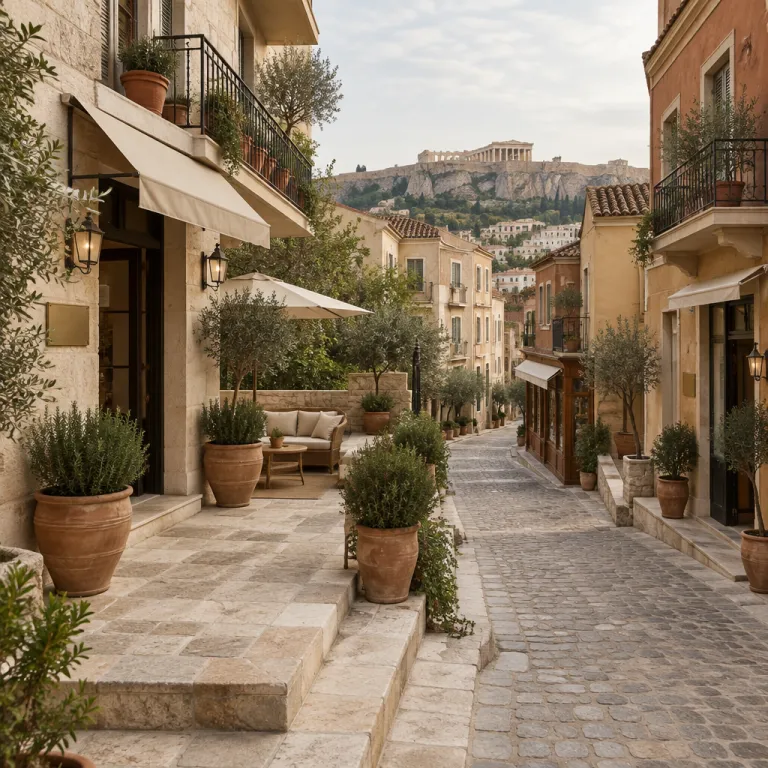
Choosing between central Athens neighborhoods for a refined first stay
For a first stay in Athens, most travelers compare the main districts in the historic core before choosing a hotel. The central area around Syntagma Square, Plaka, Monastiraki, and the Acropolis offers the best balance between heritage, walkability, and refined city energy. In this part of the city center, you can walk along almost every narrow street to major sites while still returning easily to your hotel for a midday pause.
Plaka is the most photographed neighborhood Athens presents to the world, with neoclassical houses, small churches, and steps that climb toward the Acropolis. Many visitors consider this area the best for a romantic stay Athens can offer, because several hotels provide partial Acropolis views from terraces or rooftop bars. When you compare hotels Athens options here, focus on exact location, since a quiet back street can feel very different from a busy corner near a metro station or a late night bar.
Monastiraki sits just below Plaka and feels more urban, with a lively square, the famous flea market, and direct metro links to Piraeus and the airport. This neighborhood is ideal if you want to stay in central Athens and move quickly between the Acropolis, the Ancient Agora, and the wider city by train or on foot. For a deeper look at its character, the guide to the elegant urban heart of Monastiraki explains how this area blends heritage, shopping, and contemporary style.
Kolonaki, just uphill from Syntagma Square, offers a different central neighborhood experience with embassies, galleries, and designer stores. Here, the best hotels tend to be discreet luxury hotels with polished service, refined interiors, and easy access to both the city center and the wooded slopes of Lycabettus Hill. This neighborhood Athens choice suits travelers who want a good balance between quiet residential streets and quick taxi or metro connections to the Acropolis Museum and Plaka Monastiraki.
When comparing these central neighborhoods Athens offers, think about your daily rhythm and priorities. If you plan to eat drink late and enjoy street art, Monastiraki and the adjacent Psyrri area feel more energetic, while Plaka remains calmer at night. Kolonaki works well if you want a sophisticated base in the city with easy access to both business meetings and cultural visits.
Historic athens neighborhoods around the Acropolis for culture focused stays
Travelers who want to immerse themselves in history often choose an Athens neighborhood directly under the Acropolis. Staying in this area means you can walk to the Acropolis Museum, the Parthenon entrance, and the Ancient Agora in less than fifteen minutes from many hotels. This proximity allows you to visit major sites early in the morning or late in the afternoon, when the light is softer and the city feels calmer.
Plaka remains the classic historic neighbourhood Athens visitors imagine, with its pastel houses, flowered balconies, and small squares. In this area, the best hotels are often in restored mansions, and many rooms offer framed Acropolis views that feel almost theatrical at night. When evaluating each hotel, check whether your room faces a quiet street or a busier pedestrian route, because sound carries easily in the city center.
Monastiraki and the adjacent Plaka Monastiraki corridor form one of the most layered neighborhoods Athens has, where Ottoman, Byzantine, and modern buildings stand side by side. From a single street corner, you can see the Acropolis above, the Ancient Agora ruins, and the metro station that links you to Piraeus and the airport. This mix of archaeology, transport, and commerce makes the area a good base for travelers who want both culture and convenience.
Just beyond Plaka, the neighbourhood around the Acropolis Museum and the pedestrian Dionysiou Areopagitou street offers a slightly quieter alternative. Here, several luxury hotels and smaller properties line tree shaded avenues, and many rooms have direct Acropolis views without the same crowds as the central Plaka lanes. The location is excellent if you plan to stay Athens for several nights and want to alternate museum visits with relaxed walks along the pedestrian promenade.
Urban explorers who appreciate street art and contemporary culture often extend their walks from Monastiraki toward Psyrri and Thiseio. These neighborhoods Athens districts combine restored warehouses, creative studios, and cafés where you can eat drink among locals rather than only visitors. From here, you still remain in central Athens, with the Acropolis and the Ancient Agora visible at the end of many streets, yet the atmosphere feels more residential and creative.
Kolonaki, Syntagma, and the refined city center hotel experience
For travelers who value style, service, and easy access to every part of the city, the triangle between Syntagma Square, Kolonaki, and the National Garden is a strategic choice. This central Athens area concentrates many of the best hotels, including several established luxury hotels with long histories of hosting diplomats and artists. Staying here places you within walking distance of the Parliament, high end shopping streets, and the main metro station that connects to Piraeus and the airport.
Kolonaki itself is one of the most affluent neighbourhoods Athens offers, with tree lined streets, galleries, and cafés that stay busy from morning to late evening. Many hotels in this neighbourhood focus on understated elegance rather than spectacle, with calm interiors, attentive concierges, and refined city views. If you enjoy to eat drink in stylish wine bars and restaurants frequented by a local crowd, this area will feel like a good match.
Just downhill, Syntagma Square forms the transport and symbolic heart of the city center. From a hotel near this square, you can walk in less than ten minutes to Plaka, the Acropolis Museum, and several major shopping streets. A detailed guide on what to do in Athens for an elegant city escape can help you plan days that combine cultural visits, refined dining, and relaxed strolls through these central neighborhoods.
When comparing best hotels in this part of Athens, pay attention to room orientation, soundproofing, and access to outdoor space. Some luxury hotels offer rooftop terraces with Acropolis views, while others provide quiet inner courtyards that feel like private urban retreats. If you plan to stay Athens for business and leisure combined, these details can transform your perception of the neighbourhood and the wider city.
From an urban exploration perspective, this central area also works as a hub for day trips and evening walks. You can reach the metro station at Syntagma quickly, then continue toward Piraeus for island ferries or toward the Athens Riviera for seaside dinners. Returning at night, you cross streets where the Parliament building, the National Garden, and the illuminated Acropolis frame the city center in a way that feels both ceremonial and intimate.
From Piraeus to the Athens Riviera: coastal neighborhoods for sea lovers
Not every traveler wants to stay in the dense historic core, and the coastal neighborhoods of Piraeus and the Athens Riviera offer a different perspective on the city. Piraeus, the main port, functions as both a working harbour and a neighbourhood Athens extension with its own rhythm and character. Staying here can be a good choice if you plan early ferry departures, yet still want reasonable metro access to central Athens and the Acropolis.
The area around the Piraeus metro station is practical, with several hotels that cater to cruise passengers and island hoppers. A short taxi ride away, the smaller marinas of Mikrolimano and Zea feel more intimate, with waterfront restaurants where you can eat drink while watching yachts and fishing boats. These neighborhoods Athens districts do not offer direct Acropolis views, but they compensate with sea breezes and a strong local atmosphere.
Further along the coast, the Athens Riviera stretches from the southern suburbs of Palaio Faliro and Alimos toward Glyfada, Vouliagmeni, and beyond. This long coastal area includes several luxury hotels and resorts that focus on sea access, pools, and wellness facilities rather than proximity to the city center. For travelers who want to stay Athens yet feel on holiday by the water, this location can be the best compromise.
Urban explorers often split their stay between central Athens neighborhoods and the Athens Riviera to experience both sides of the city. A few nights near Syntagma Square or Plaka Monastiraki allow easy visits to the Acropolis Museum and the Ancient Agora, followed by several nights on the coast for relaxation. This combination works especially well for longer trips, when you can adjust your neighbourhood choice to your changing energy levels.
Reaching the Athens Riviera from central neighbourhoods Athens is straightforward by tram, taxi, or private transfer. Travel times vary with traffic, but many hotels along the coast are within thirty to forty minutes of the Acropolis area. When choosing between coastal and central locations, consider whether you prefer to walk out of your hotel into historic streets or onto a promenade lined with palm trees and sea views.
Alternative neighborhoods in central Athens for street art and local life
Beyond the famous postcard views, several central Athens neighborhoods appeal to travelers who enjoy street art, creative spaces, and a more local rhythm. Areas such as Psyrri, Exarchia, and Metaxourgeio sit just beyond the classic tourist routes yet remain close to the city center and the Acropolis. Staying in these districts suits visitors who want to explore the city as an evolving urban landscape rather than only an open air museum.
Psyrri, just northwest of Monastiraki, has transformed from a working class neighbourhood into a lively quarter filled with bars, small hotels, and performance spaces. Many façades here feature large scale street art, and the atmosphere changes from quiet mornings to energetic evenings when locals and visitors eat drink at outdoor tables. From a hotel in this area, you can walk in minutes to Monastiraki metro station, the Ancient Agora, and the main shopping streets of central Athens.
Exarchia, further north, is known for its political murals, bookshops, and strong student presence. While it is less polished than Kolonaki or Plaka, this neighborhood Athens offers a candid view of the city, with independent cafés and music venues that attract a loyal local crowd. Travelers who choose to stay here usually value authenticity and cultural debate more than traditional luxury hotels or postcard perfect Acropolis views.
Metaxourgeio, west of Omonia Square, has seen a gradual arrival of galleries, creative studios, and a few design focused hotels. The neighbourhood remains mixed, with both renovated buildings and older structures, but its location allows quick metro access to the Acropolis Museum, Syntagma Square, and Piraeus. For urban explorers, this part of central Athens offers a good base to photograph street art, attend performances, and experience the city’s contemporary layers.
When evaluating these alternative neighborhoods Athens presents, pay close attention to the exact street and block where your hotel stands. A property on a lively square can feel very different from one on a quieter side street only two minutes away. Reading recent guest feedback and checking maps for distance to a metro station, main sites, and the city center will help you choose a neighbourhood that matches your comfort level and curiosity.
Planning an elegant urban exploration itinerary across athens neighborhoods
Designing an itinerary across multiple Athens neighborhoods allows you to experience the city as a sequence of distinct yet connected worlds. One effective approach is to start in the historic core near the Acropolis, then move outward to Kolonaki, Piraeus, or the Athens Riviera as your stay progresses. This structure lets you balance intense cultural visits with quieter days by the sea or in residential streets.
Begin with two or three nights in a central hotel near Plaka Monastiraki or the Acropolis Museum, where you can walk to the Parthenon, the Ancient Agora, and Syntagma Square. From this base, you can also plan an evening visit to ancient sites during special events, such as the full moon openings described in the guide to Athens under the stars. These experiences reveal how the city center transforms at night, with the Acropolis and surrounding neighbourhoods bathed in theatrical light.
Next, consider moving to Kolonaki or another refined neighbourhood Athens offers for shopping, gallery visits, and leisurely café breaks. Here, you can eat drink in elegant restaurants, explore side streets lined with design stores, and enjoy views over the city from Lycabettus Hill. Many of the best hotels in this area provide quick access to a metro station, making it easy to reach both Piraeus and the Athens Riviera for day trips.
To complete your urban exploration, spend several nights either in Piraeus or along the Athens Riviera. Coastal neighborhoods allow you to stay Athens while shifting your focus from monuments to marinas, promenades, and sea swimming. Returning to the city center for a final evening, you will perceive each neighborhood, street, and square differently, having experienced the city as a collection of interconnected neighbourhoods Athens rather than a single compact area.
Throughout this process, treat your choice of hotel and location as part of the narrative of your trip. A luxury hotel with Acropolis views in central Athens tells a different story from a harbour side property in Piraeus or a resort on the Athens Riviera. By aligning each neighbourhood, hotel style, and daily route, you create a coherent journey through the city that reflects your own pace, interests, and sense of elegance.
Key statistics for planning a stay across athens neighborhoods
- According to the Hellenic Statistical Authority (ELSTAT), the wider Athens metropolitan area hosts more than three million residents (2021 estimate), which explains the strong contrasts between quiet neighbourhoods and dense city center streets.
- Data from the Greek National Tourism Organization (GNTO, 2019) indicate that over six million international visitors arrive in Athens annually, with a majority choosing to stay in central Athens neighborhoods within walking distance of the Acropolis and Syntagma Square.
- Transport figures from Athens Urban Transport (OASA, 2020) show that Syntagma and Monastiraki metro stations rank among the busiest in the city, making these locations particularly convenient for travelers who want fast access to both Piraeus and the airport.
- Hotel industry reports from the Hellenic Chamber of Hotels (2022) highlight that luxury hotels in central Athens and along the Athens Riviera achieve some of the highest occupancy rates in the country, especially during spring and autumn.
- Municipal data from the City of Athens (2021) indicate that pedestrianized streets around the Acropolis Museum and the Ancient Agora have significantly increased foot traffic in nearby neighborhoods, reinforcing their appeal for visitors who prefer to explore on foot.